
Why High Brightness Displays Are Essential for Retail and Commercial Environments
In today’s competitive retail and commercial markets, delivering clear and engaging visual content is essential for attracting attention, communicating information, and creating a better customer experience. From storefront advertising and shopping mall promotions to restaurant menu boards and corporate information screens, digital displays have become an important part of modern business communication.
However, not every display performs well in every environment. Standard screens can become difficult to read under strong ambient light, near large windows, or in locations exposed to sunlight. When content is difficult to see, even a well-designed advertising campaign can lose its impact.
This is why high brightness displays are essential for many retail and commercial applications. By providing higher screen luminance and, when properly designed, improved visibility in bright environments, they help businesses deliver digital content where standard displays may struggle.
In this article, we explain why high brightness displays matter, how they benefit different industries, what buyers should consider when selecting a commercial display, and how to choose the right solution for your project.
What Is a High Brightness Display?
A high brightness display is a commercial screen designed to produce higher luminance than a standard display, helping content remain visible in bright indoor environments and selected window-facing or outdoor applications.
Screen brightness is measured in nits, equivalent to candelas per square meter (cd/m²). The brightness required depends on ambient lighting, sunlight exposure, screen reflections, viewing distance, and installation conditions.
For example, a standard indoor display may be suitable for a store interior with controlled lighting, while a window-facing display may need substantially higher brightness to remain readable through storefront glass in daylight.
High brightness displays are available in different sizes, brightness levels, mounting configurations, and product designs. Depending on the application, they may be used for indoor digital signage, high brightness window displays, outdoor digital signage, digital menu boards, and other commercial display systems.
Importantly, brightness alone does not guarantee readability in direct sunlight. Anti-reflection performance, contrast, thermal management, and the complete product design also matter.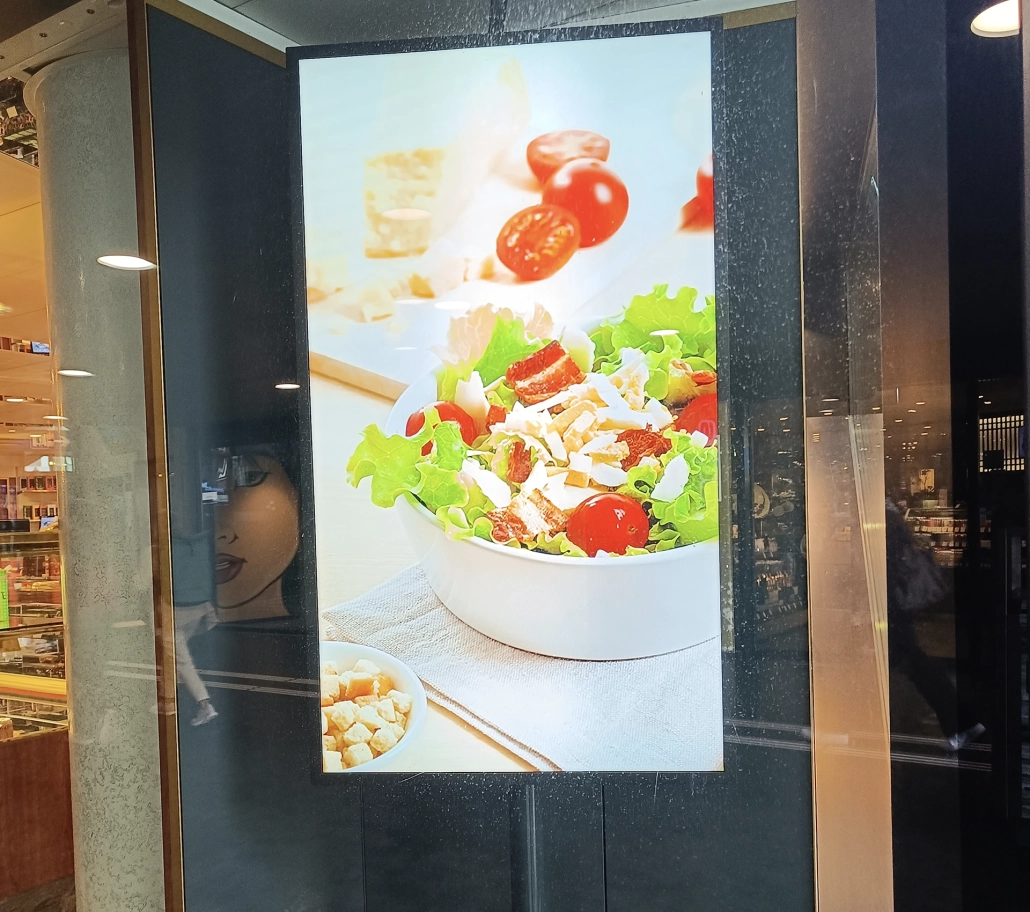
1. Improve Visibility in Bright Retail Environments
One of the main reasons businesses invest in high brightness displays is to maintain readable content under strong ambient lighting.
Retail stores often combine ceiling lights, display lighting, natural daylight, and reflections from glass or polished surfaces. These conditions can reduce the perceived contrast of a screen and make text, product images, and promotional messages harder to see.
High brightness displays help address this challenge by providing more luminance when the environment requires it.
Where This Matters Most
- Retail stores with large windows or skylights
- Shopping malls and bright public spaces
- Showrooms displaying products and promotional content
- Storefront windows facing pedestrians
- Commercial entrances and reception areas
For retailers, improved visibility helps ensure that promotional content can be seen by customers from the intended viewing distance.
2. Capture Customer Attention with Digital Advertising
Retail advertising competes with storefront displays, printed posters, product arrangements, and other visual information. A display that is too dim for its environment may fail to attract attention, particularly during daylight hours.
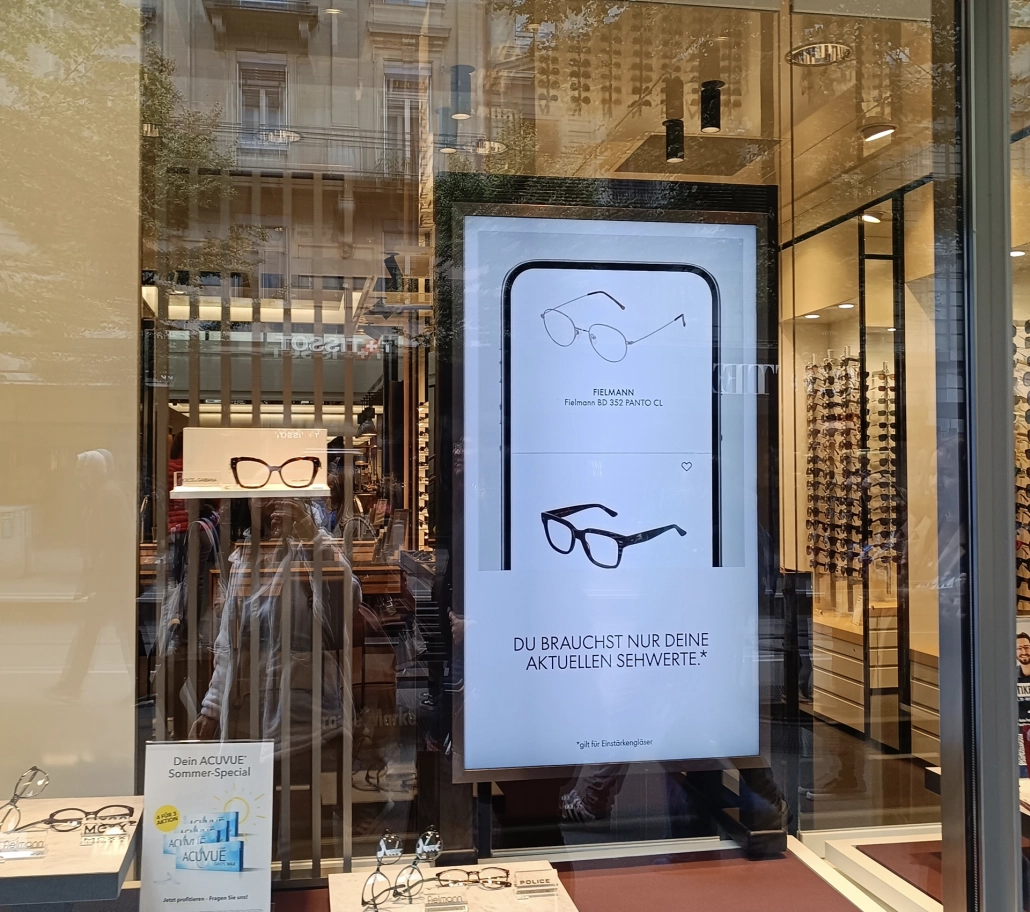
High brightness digital signage can help retailers present promotional videos, seasonal campaigns, new product launches, and brand messages more clearly.
Key Benefits for Retailers
More visible promotional content: Appropriate brightness helps advertising remain legible in bright locations.
Dynamic content: Businesses can update videos, prices, product images, and promotions without replacing printed materials.
Flexible campaign management: Digital content can be adapted for different times, products, and customer groups.
Consistent brand presentation: Retail chains can deploy standardized content across multiple stores using suitable content management systems.
Brightness is only one element of effective advertising. Good creative design, readable text, suitable viewing angles, and relevant messaging are also essential.
3. Enhance Storefront Window Advertising
Storefront windows are valuable advertising spaces because they allow retailers to communicate with people before they enter a store.
However, sunlight and reflections from storefront glass can make standard displays difficult to read. This is particularly challenging for stores facing direct daylight or operating in areas with strong seasonal sunlight.
High brightness window displays are designed for these more demanding viewing conditions.
Why High Brightness Window Displays Matter
- Help promotional content remain visible through storefront windows.
- Support brand advertising and product demonstrations throughout the day.
- Allow retailers to change campaigns without printing and installing new posters.
- Offer different installation options, including floor-standing, wall-mounted, and suspended designs.
- Can be configured for single-sided or double-sided viewing, depending on the product.
When selecting a window display, buyers should consider the direction of sunlight, the type of glass, the distance between the screen and the window, reflections, and the intended viewing angle.
For strongly sunlit storefronts, a higher brightness rating may be necessary. A site assessment or test installation is recommended when visibility is critical.
4. Improve Digital Menu Boards in Restaurants and QSR Chains
Restaurants and quick-service restaurant (QSR) chains use digital menu boards to display menus, prices, promotional offers, and product images.
In indoor dining areas, a suitably specified commercial display may be sufficient. However, menu boards installed beneath bright lighting, near windows, or in drive-through lanes may need higher brightness to maintain readability.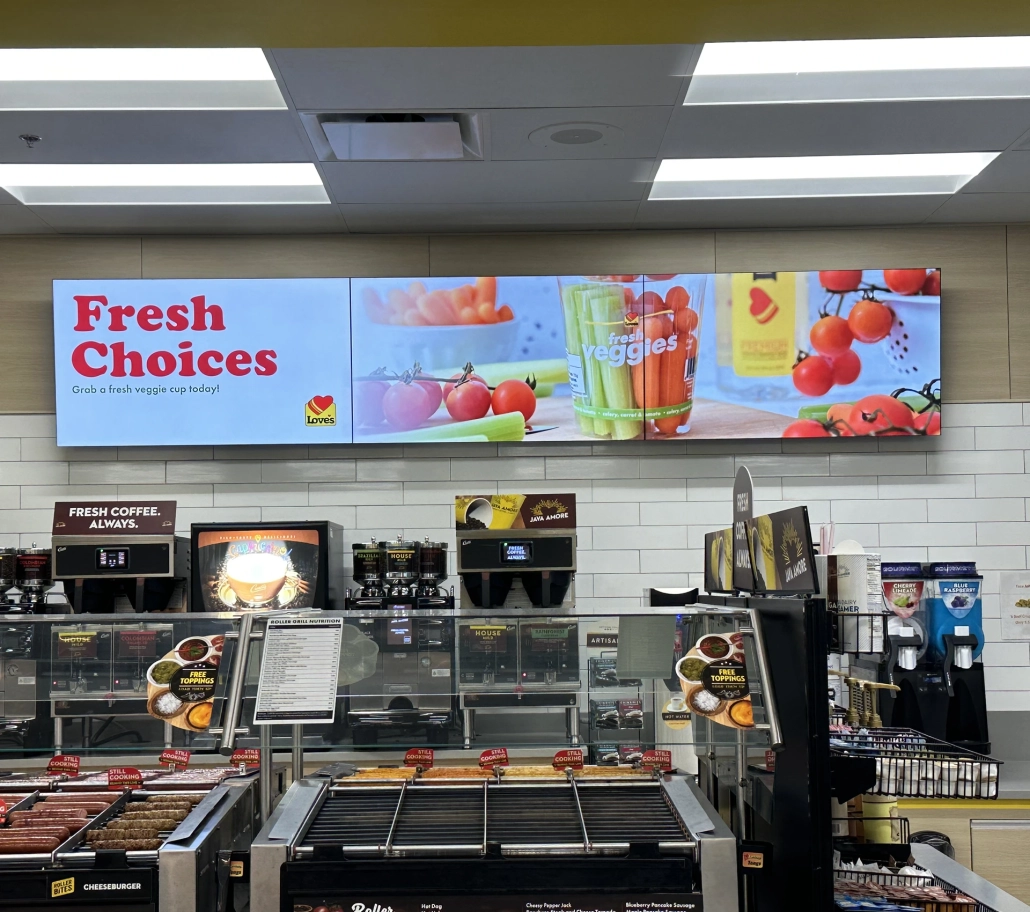
Benefits of High Brightness Menu Displays
Clearer menu presentation: Customers can more easily view product names, prices, and promotional messages when the brightness is appropriate for the environment.
Flexible menu updates: Restaurant operators can change prices, meal combinations, and seasonal offers digitally.
Support for chain operations: Multiple locations can use standardized display configurations and content workflows.
Suitable solutions for different locations: Indoor menu boards, covered outdoor menu displays, and exposed drive-through installations can be specified according to their different environmental requirements.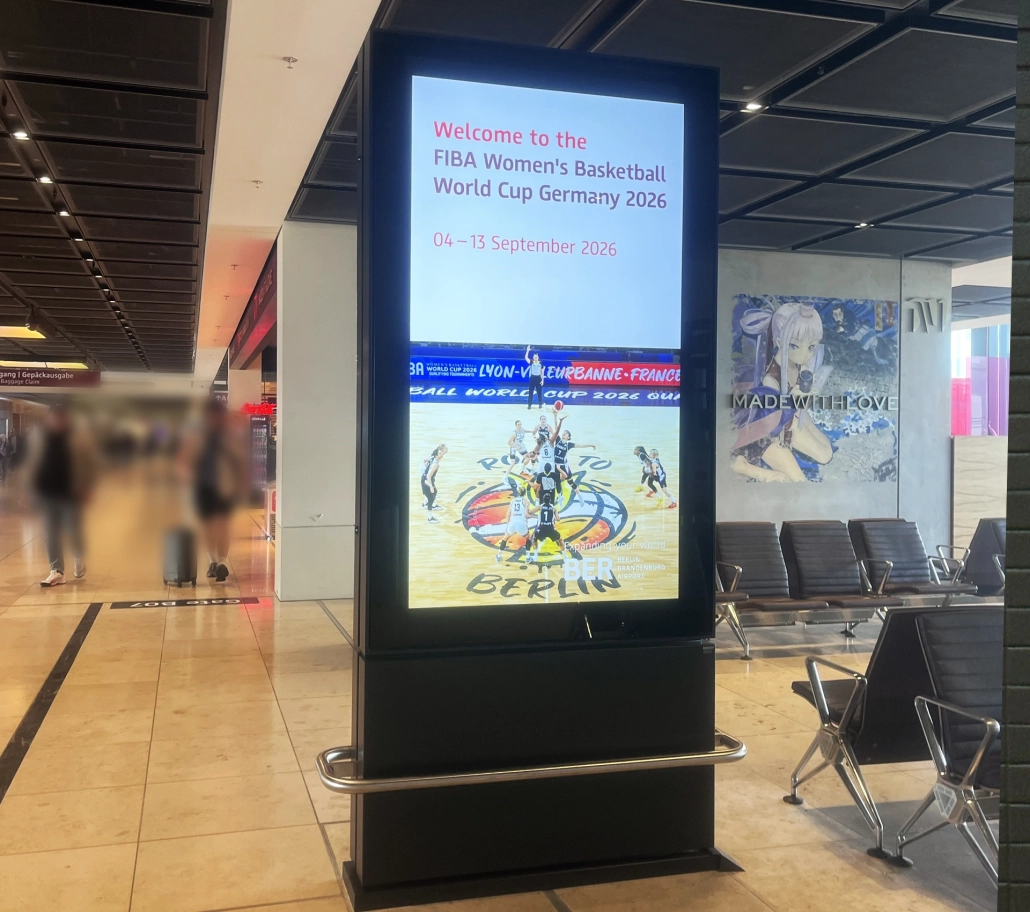
For drive-through applications, brightness should be considered together with weather protection, thermal management, viewing distance, operating temperature, and long operating hours.
5. Support Better Communication in Commercial Buildings
High brightness displays are not limited to retail advertising. They can also support information delivery in offices, hotels, exhibition centers, transportation facilities, and other commercial buildings.
Typical applications include:
- Lobby information screens
- Visitor guidance and wayfinding
- Exhibition and event displays
- Product demonstrations in showrooms
- Commercial building announcements
- Transportation information displays
In areas with bright natural light or strong overhead lighting, a suitably selected high brightness display can help improve the visibility of important information.
The appropriate specification depends on the viewing environment. A screen in a shaded lobby may require much less brightness than a display facing a sunlit entrance.
6. Improve Visibility in Semi-Outdoor and Outdoor Applications
Commercial displays installed outdoors or in semi-outdoor locations face additional challenges, including sunlight, heat, moisture, dust, and changing temperatures.
A higher brightness rating may help content remain visible in bright surroundings, but outdoor performance depends on the complete system—not just the LCD panel.
Important Requirements for Outdoor Displays
Appropriate brightness: Select the luminance level according to sunlight exposure and viewing conditions.
Thermal management: Ensure that the cooling system is designed for the expected ambient temperature and operating schedule.
Environmental protection: Check the enclosure design and relevant IP rating for dust and water exposure.
Optical performance: Evaluate reflections, contrast, and viewing angles.
Operational reliability: Confirm the rated operating hours, maintenance requirements, and warranty conditions.
For fully exposed, direct-sunlight applications, a display may need substantially higher brightness than an indoor commercial model. Buyers should not assume that every high brightness display is suitable for outdoor use.
7. Choose the Right Brightness to Balance Performance and Cost
Higher brightness is not always better. A display that is unnecessarily bright for its environment may increase power consumption and heat generation without meaningfully improving the viewing experience.
Conversely, a display with insufficient brightness may leave promotional content difficult to read and reduce the value of the installation.
The following ranges are general starting points for LCD commercial display selection, not universal standards.
| Application | Indicative Brightness Range | Main Consideration |
|---|---|---|
| Standard indoor commercial environments | 300–500 nits | Controlled lighting and viewing comfort |
| Bright indoor retail environments | 500–1,000 nits | Strong artificial lighting or natural daylight |
| Window-facing displays | 1,000–2,500+ nits | Glass reflections and sunlight exposure |
| Outdoor direct-sunlight applications | Often 2,500–5,000+ nits | Sunlight, heat, reflections, and environmental protection |
Actual requirements can fall outside these ranges. Some window-facing installations require more brightness, while shaded locations may need less. The best specification should be based on the actual site, the product’s optical performance, and the manufacturer’s recommendations.
How to Select the Right Brightness
- Identify whether the screen will be installed indoors, behind a window, under a canopy, or outdoors in direct sunlight.
- Assess the strongest ambient light during the hours when the display will operate.
- Consider reflections from glass and nearby surfaces.
- Confirm the screen’s typical or guaranteed brightness specification.
- Evaluate power consumption, cooling, and operating-temperature requirements.
- Test the display under representative lighting conditions when possible.
This approach helps buyers avoid both under-specification and unnecessary investment in excessive brightness.
8. What Should B2B Buyers Look for in a High Brightness Display Manufacturer?
For distributors, system integrators, retail chains, and commercial project contractors, choosing the right supplier is as important as selecting the right brightness.
A reliable manufacturer should be able to provide clear technical information and help match product specifications to the intended application.
Key Purchasing Considerations
Product range: Does the manufacturer offer indoor digital signage, high brightness window displays, outdoor digital signage, and other commercial display formats?
OEM/ODM capabilities: Can screen size, brightness, enclosure design, mounting, connectivity, or other specifications be customized where technically feasible?
Engineering support: Can the supplier discuss installation conditions, thermal design, interfaces, and integration requirements?
Quality control: Are product specifications, inspection procedures, and relevant compliance documents available for review?
Bulk-order capacity: Can the manufacturer coordinate samples, production schedules, packaging, and repeat orders?
After-sales support: Are warranty conditions, spare parts, and technical assistance clearly defined?
For B2B buyers, these factors can be particularly important when deploying displays across multiple stores or managing long-term distribution programs.
Why Choose Kontech for Commercial Display Solutions?
Kontech provides commercial display solutions for businesses that need reliable products for retail, advertising, and other professional applications.
Its product range includes:
- Indoor Digital Signage
- High Brightness Window Displays
- Outdoor Digital Signage
- Digital Menu Boards
- Commercial LCD Monitors
- Open Frame Monitors and other specialized display products
For distributors, system integrators, and OEM/ODM customers, the right display solution should match the installation environment, product specifications, integration needs, and project volume.
Contact Kontech to discuss your requirements, request product information, and explore suitable display options for your commercial project.
Frequently Asked Questions
Why are high brightness displays important in retail?
High brightness displays help maintain content visibility in bright retail environments, including locations near windows, skylights, and strong artificial lighting. They can support promotional advertising, product information, and storefront communication.
Are high brightness displays better than standard commercial displays?
They are better suited to environments that require more screen luminance. For a standard indoor space with controlled lighting, a conventional commercial display may be sufficient. The right choice depends on the installation conditions.
How many nits are needed for retail digital signage?
Many indoor retail applications can use displays in the 300–1,000-nit range, depending on ambient lighting. Window-facing and outdoor applications may require substantially higher brightness. The final specification should be based on site conditions and optical performance.
Can high brightness displays be used outdoors?
Some are designed for outdoor use, but brightness alone is not enough. Buyers must also verify environmental protection, thermal management, operating-temperature range, optical performance, and continuous-operation requirements.
Do high brightness displays consume more power?
Higher brightness can increase power consumption and heat generation, although actual consumption depends on the panel, backlight, electronics, and operating brightness. Automatic brightness adjustment may help reduce unnecessary energy use.
Can high brightness displays be customized for OEM/ODM projects?
Depending on the manufacturer’s capabilities, customization may include screen size, brightness, enclosure design, mounting, interfaces, and other technical specifications. Confirm the available options, minimum order quantity, and production lead time with the supplier.
Find the Right High Brightness Display for Your Business
Whether you are sourcing displays for retail stores, shopping malls, restaurants, storefront advertising, or commercial integration projects, selecting the right brightness is essential for achieving the intended viewing performance.
Kontech supports B2B buyers looking for commercial display solutions, product customization, and bulk purchasing options.
Contact Kontech to discuss your application, review suitable product specifications, and request a solution for your next commercial display project.

