
The Future of High Brightness Commercial Displays in Digital Signage
Digital signage has become an essential communication tool for retailers, restaurants, shopping centers, transportation hubs, and public spaces. As businesses compete for customer attention in increasingly crowded environments, the demand for clear, engaging, and reliable commercial displays continues to grow.
Among the technologies shaping this market, high brightness commercial displays play an increasingly important role. Designed to deliver visible content in bright indoor environments, shop windows, and outdoor locations, these displays help businesses communicate more effectively in conditions where standard commercial screens may struggle.
But what does the future hold for high brightness digital signage?
From smarter brightness control and improved energy efficiency to AI-powered content management, advanced optical technologies, and customized display solutions, several developments are expected to influence the next generation of commercial displays.
In this article, we explore the key trends shaping the future of high brightness commercial displays and what B2B buyers should consider when choosing a digital signage solution.
1. Growing Demand for High Brightness Digital Signage
As businesses expand their use of digital signage, displays must perform reliably in a wider range of lighting conditions.
Traditional indoor displays are generally designed for controlled lighting environments. However, screens installed near storefront windows, in shopping malls with strong ambient lighting, or in outdoor advertising locations face additional challenges.
Sunlight and bright ambient light can reduce perceived contrast, create reflections, and make displayed content difficult to read.
High brightness commercial displays help address these challenges by producing more light, improving content visibility when competing with strong environmental illumination.
Key Growth Applications
Retail and shop window displays
Retailers use high brightness displays to showcase product promotions, seasonal campaigns, and brand messages through storefront windows. Bright, clear visuals help attract attention from pedestrians and shoppers.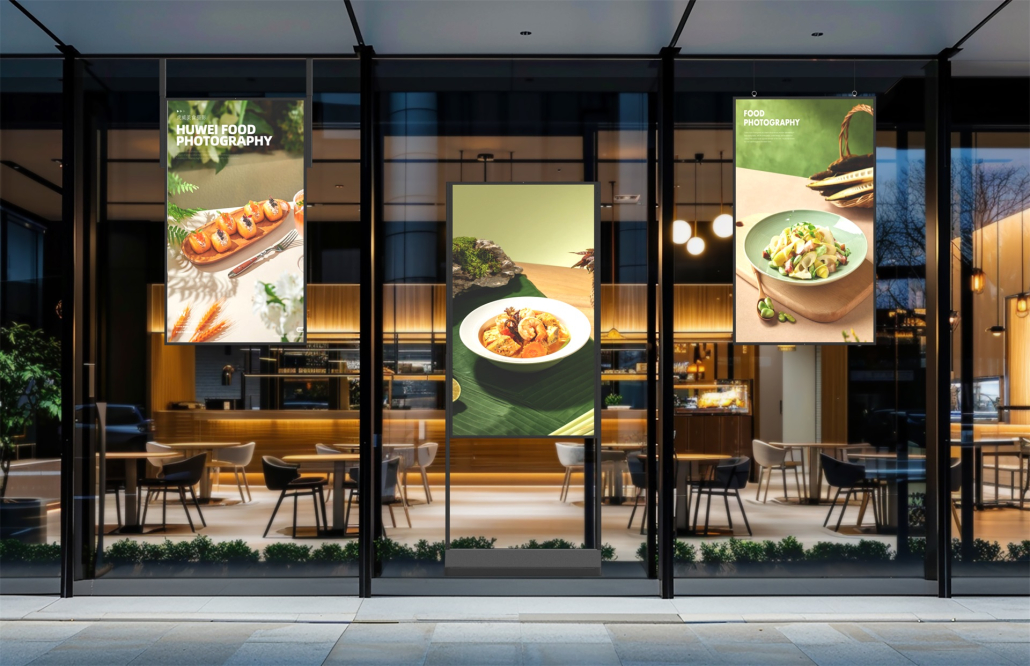
Digital menu boards
Restaurants, cafés, quick-service restaurant chains, and drive-thru businesses increasingly use digital menu boards to present menus, prices, and promotional content. High brightness options are particularly valuable in bright dining areas and outdoor ordering environments.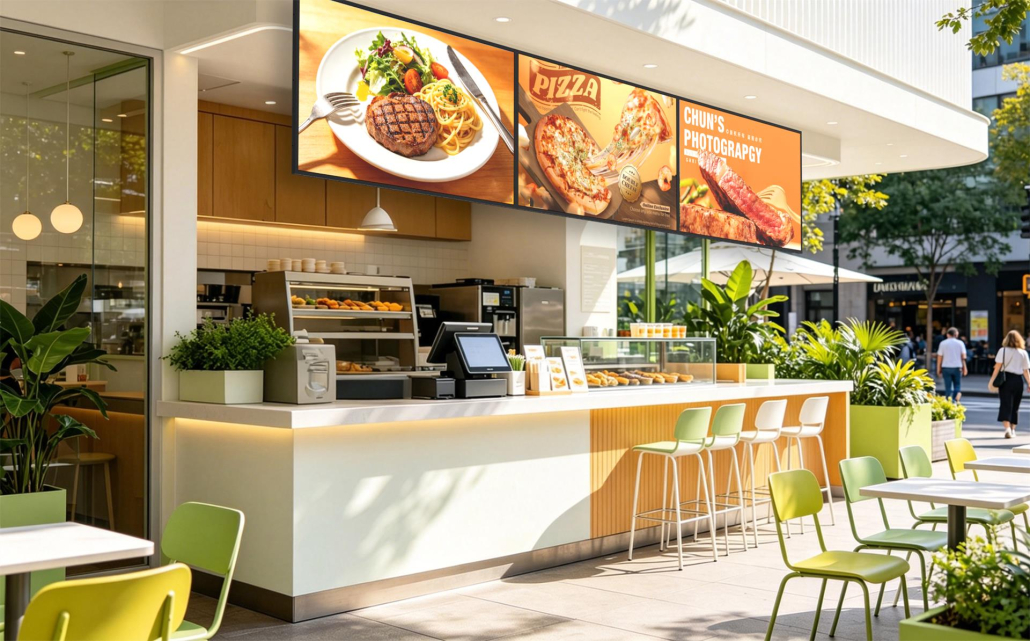
Outdoor advertising
Outdoor digital signage is used in shopping districts, transportation locations, roadside advertising, and public spaces. Depending on the installation, high brightness output and appropriate optical design help maintain readability in daylight.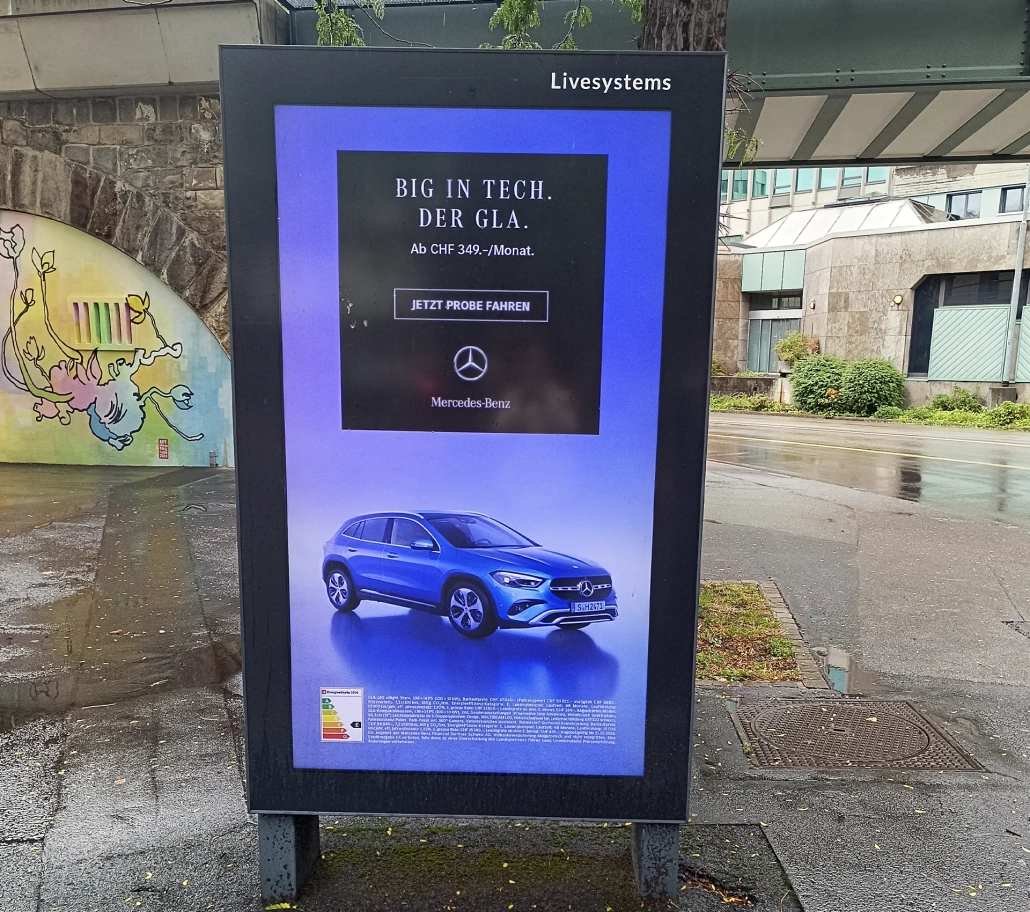
Commercial and industrial applications
High brightness displays can also support information presentation in factories, transportation facilities, kiosks, and other commercial environments where ambient lighting or viewing conditions are challenging.
As digital signage becomes more widespread, demand is likely to grow for displays tailored to specific environments rather than one-size-fits-all screens.
2. Smarter Brightness Control and Adaptive Display Technology
One important direction for the future of commercial displays is smarter control of screen brightness.
A display operating in direct sunlight may need significantly more brightness than the same screen operating in a shaded area or at night. Running at maximum brightness continuously can increase energy consumption and heat generation without always improving the viewing experience.
Automatic brightness control helps address this problem.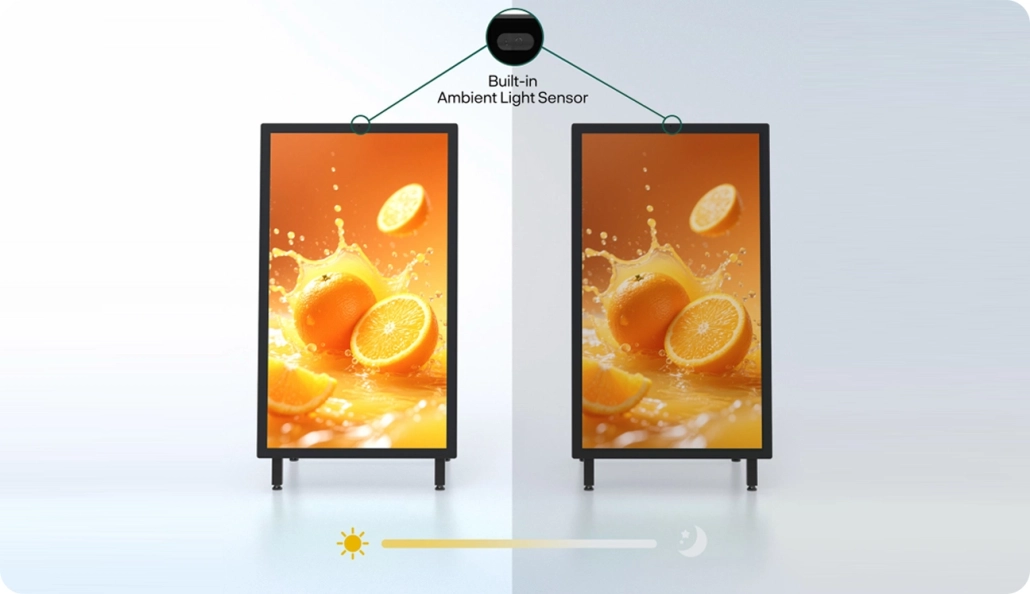
How Adaptive Brightness Improves Performance
Using ambient light sensors and configurable control systems, a display can adjust its brightness according to surrounding lighting conditions.
Potential benefits include:
- Better visibility as ambient light changes.
- Reduced unnecessary brightness during darker periods.
- More comfortable viewing in different environments.
- Better management of power consumption and thermal load.
- More consistent operation across day and night.
Future commercial display systems may combine adaptive brightness with remote monitoring and centralized configuration, making it easier for businesses to manage large networks of digital signage.
For distributors and system integrators, these capabilities can reduce operational complexity and support more efficient deployment across multiple locations.
3. Energy Efficiency Will Become More Important
As businesses deploy more digital displays, energy consumption becomes an increasingly important purchasing consideration.
High brightness requires sufficient backlight output, which can increase power consumption and heat generation. Manufacturers therefore face the challenge of balancing screen visibility with operating costs and long-term reliability.
Technologies Supporting Better Energy Efficiency
Improved LED backlighting
Advances in backlight design and component efficiency can help deliver the required brightness with better energy performance.
Adaptive brightness control
Automatically reducing brightness when strong illumination is no longer present can avoid unnecessary energy use.
Improved thermal design
Efficient heat dissipation can help maintain stable operation and reduce the need for excessive cooling.
Application-specific brightness selection
Selecting an appropriate brightness level for the actual installation can prevent businesses from paying for performance they do not need.
For B2B buyers, energy efficiency should be evaluated alongside brightness, image quality, expected operating hours, maintenance requirements, and total cost of ownership.
The goal is not simply to choose the display with the lowest power consumption. It is to find the right balance between visibility, reliability, and operating cost.
4. Optical Technologies Will Continue to Improve Outdoor Visibility
Higher brightness alone cannot solve every visibility problem.
When sunlight reflects off the front surface of a screen, glare can obscure content even when the display produces substantial light. Future high brightness commercial displays will continue to depend on optical technologies that help control reflections and improve perceived contrast.
Key Optical Technologies
Anti-glare surface treatment
Anti-glare treatments diffuse reflected light to reduce distracting reflections. The correct treatment should balance glare reduction with image sharpness, color performance, and cleaning requirements.
Anti-reflective coatings
Anti-reflective coatings are designed to reduce the amount of light reflected from a surface. Their performance differs from that of anti-glare treatments, and the most suitable solution depends on the display design and application.
Optical bonding
Optical bonding fills the gap between optical components, such as an LCD panel and cover glass, with a transparent bonding material. This can reduce internal reflections and improve perceived contrast in bright environments.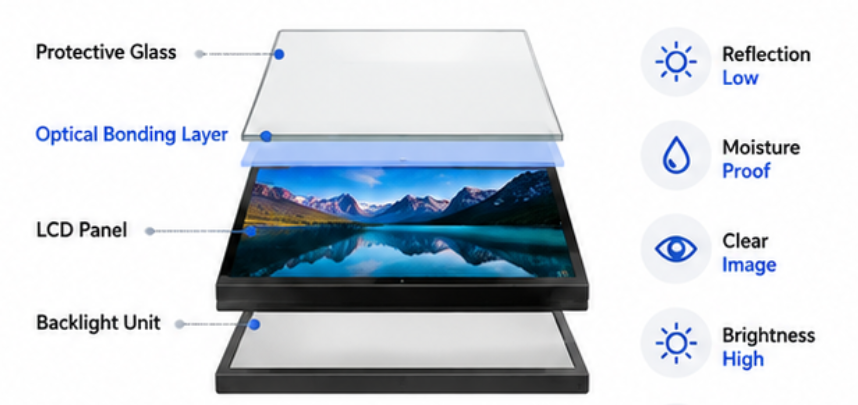
Improved display panel performance
Panel contrast, viewing angle, and color consistency also influence how well content can be seen under challenging lighting conditions.
These technologies work together rather than independently. The best solution depends on brightness, surface reflection, viewing angle, screen placement, and ambient light.
For digital signage installed behind shop windows or in exposed outdoor locations, evaluating the complete optical system is more useful than comparing brightness figures alone.
5. AI and Smart Content Management Will Transform Digital Signage
Artificial intelligence is creating new opportunities for digital signage beyond simply displaying scheduled images and videos.
Smart Content Management
As content management systems evolve, businesses may increasingly use data-driven tools to determine what content to display, when to display it, and how to manage large display networks.
Emerging Opportunities
Context-aware content scheduling
Digital signage platforms can use predefined rules or available business data to schedule content according to time, location, campaigns, or operating conditions.
Audience-oriented content strategies
Where suitable sensors, analytics, and privacy-compliant systems are available, businesses may use aggregated audience insights to evaluate campaign performance and improve content planning.
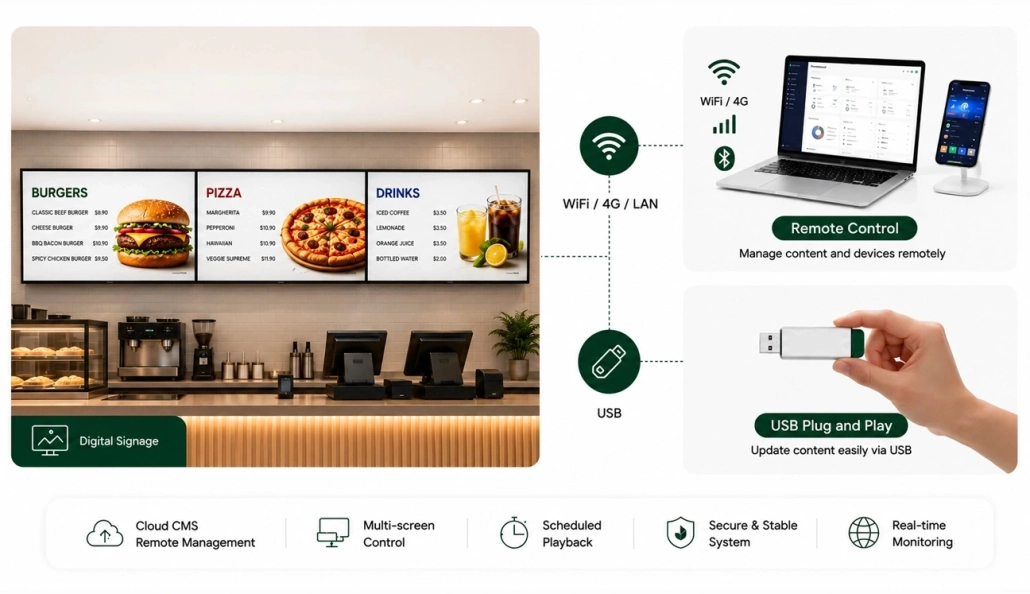
Automated content management
Cloud-based platforms can simplify content distribution, schedule updates, and manage multiple displays from a centralized interface.
Remote diagnostics and monitoring
Connected systems can help operators monitor device status, identify potential issues, and reduce the need for unnecessary on-site inspections.
AI does not automatically improve screen visibility. Its value lies in making content more relevant and display networks easier to manage, while the hardware must still provide the brightness, optical performance, and reliability required by the installation.
For commercial display buyers, compatibility between the display hardware and the intended content management platform is an important consideration.
6. High Brightness Displays Will Support Smarter Retail Experiences
Retail environments are becoming more digital, and high brightness commercial displays are an important part of this transformation.
Retailers increasingly use digital screens to connect physical stores with online marketing, update promotional messages quickly, and deliver more dynamic product information.
Key Retail Applications
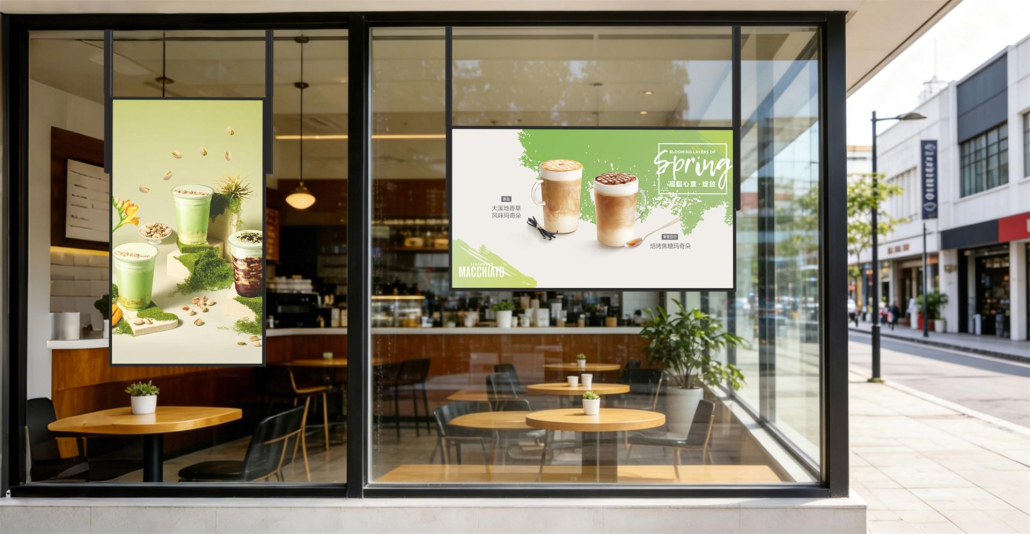
High brightness window displays
These displays help brands present promotions through storefront windows, particularly where sunlight or strong outdoor illumination affects visibility.
Digital promotional signage
Retailers can update prices, product information, and seasonal promotions without repeatedly printing and replacing physical materials.
Multi-screen retail installations
Multiple displays can create coordinated promotional areas, branded walls, and digital product showcases.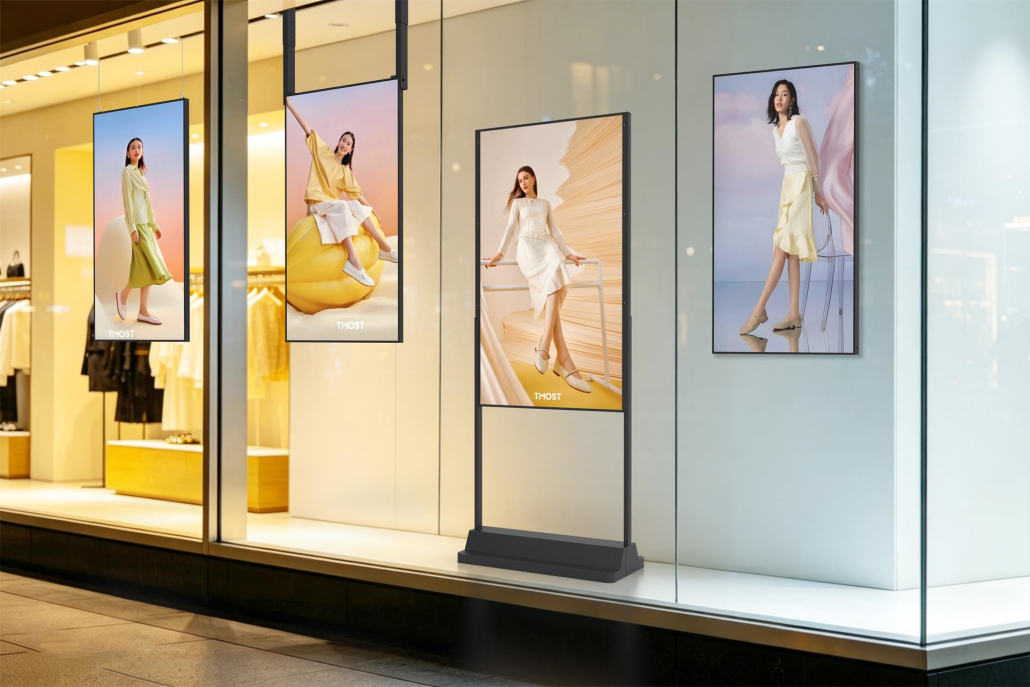
Interactive customer experiences
When paired with compatible touch systems or other interactive technologies, commercial displays can support product exploration, self-service, and information access.
For retailers, the future is not simply about installing brighter screens. It is about integrating digital signage into a broader customer experience strategy.
Display brightness, screen size, installation design, content management, and network reliability should all be considered together.
7. Outdoor Digital Signage Will Require More Robust Engineering
Outdoor digital signage is exposed to conditions that indoor displays may never encounter, including direct sunlight, high temperatures, rain, dust, and changing weather.
As outdoor display applications expand, product engineering will remain critical to reliable performance.
Important Design Considerations
High brightness and optical performance
The display should provide sufficient brightness and appropriate reflection control for the intended viewing environment.
Thermal management
High brightness operation generates heat, while direct sunlight adds further thermal load. Enclosure design, heat dissipation, and any required active cooling must be matched to the product’s intended operating conditions.
Environmental protection
The enclosure should provide the level of protection required for the installation. Buyers should verify the actual IP rating and relevant environmental specifications rather than relying solely on the term “outdoor.”
Operating temperature
The manufacturer’s rated operating temperature should match the climate and installation conditions expected at the site.
Serviceability and reliability
For large installations, access to replacement parts, technical support, and maintenance procedures can significantly affect total ownership costs.
These factors are particularly important for roadside advertising screens, outdoor digital menu boards, self-service kiosks, and other systems expected to operate for extended periods.
8. Customization and OEM/ODM Solutions Will Gain Importance
As digital signage applications become more diverse, standardized products may not meet every project’s requirements.
Different markets and installation environments require different screen sizes, brightness levels, mounting structures, enclosures, interfaces, and control features.
This creates opportunities for manufacturers that can support OEM and ODM customization.
What Can Be Customized?
Depending on the manufacturer’s capabilities and the product platform, customization may include:
- Screen size and display format.
- Brightness and backlight configuration.
- Housing dimensions and industrial design.
- Mounting methods and installation structures.
- Touch functionality and system interfaces.
- Connectivity and content management compatibility.
- Branding, packaging, and project-specific specifications.
For distributors, brand owners, and system integrators, a capable manufacturing partner can help adapt a display solution to local market requirements and project needs.
When evaluating an OEM/ODM supplier, buyers should also review production capacity, quality control procedures, engineering support, certifications, sample evaluation processes, and long-term spare parts availability.
Customization should improve application suitability without compromising reliability, maintainability, or product consistency.
9. How B2B Buyers Should Choose Future-Ready Commercial Displays
New technologies can create opportunities, but buyers should focus on practical requirements rather than choosing products based on trends alone.
Before selecting a high brightness commercial display, consider the following factors.
| Evaluation Factor | Questions to Ask |
|---|---|
| Brightness | Is the brightness suitable for the actual ambient lighting conditions? |
| Optical performance | Are reflection control, contrast, and viewing angle appropriate? |
| Energy efficiency | What is the expected power consumption at the required brightness? |
| Thermal management | Can the display operate reliably under expected temperature conditions? |
| Environmental protection | Does the product meet the installation’s protection requirements? |
| Content management | Is the display compatible with the intended software and control platform? |
| Customization | Can the manufacturer meet project-specific mechanical and electrical requirements? |
| Quality and support | Are testing, warranty, technical support, and spare parts available? |
| Total cost of ownership | What are the expected costs of energy, maintenance, replacement, and downtime? |
For bulk purchasing projects, buyers should also confirm production lead times, quality consistency across units, and the supplier’s ability to support future orders.
The most suitable display is the one that meets the project’s performance requirements while providing dependable long-term value.
How Kontech Supports the Future of High Brightness Commercial Displays
As a commercial display manufacturer, Kontech focuses on high brightness LCD display solutions for retail, digital signage, outdoor advertising, and other commercial applications.
For B2B buyers, choosing a display involves more than selecting a screen with a high nit rating. It requires matching the display configuration to the installation environment, content requirements, operating schedule, and project budget.
Depending on the product model and project requirements, buyers can evaluate options related to:
- High brightness display configurations.
- Indoor, semi-outdoor, and outdoor application requirements.
- Digital menu boards and retail window displays.
- Outdoor digital signage formats.
- Product-specific OEM/ODM customization.
- Technical specifications and integration requirements.
Whether you are a distributor, system integrator, commercial display brand, or project contractor, working with an experienced manufacturer can help you develop a display solution that meets your target market’s requirements.
Contact Kontech to discuss your high brightness commercial display project, request product specifications, or explore OEM/ODM manufacturing options.

